Glossary
The language of polo
Every term you'll hear at the boards and in the registry — grouped and defined.
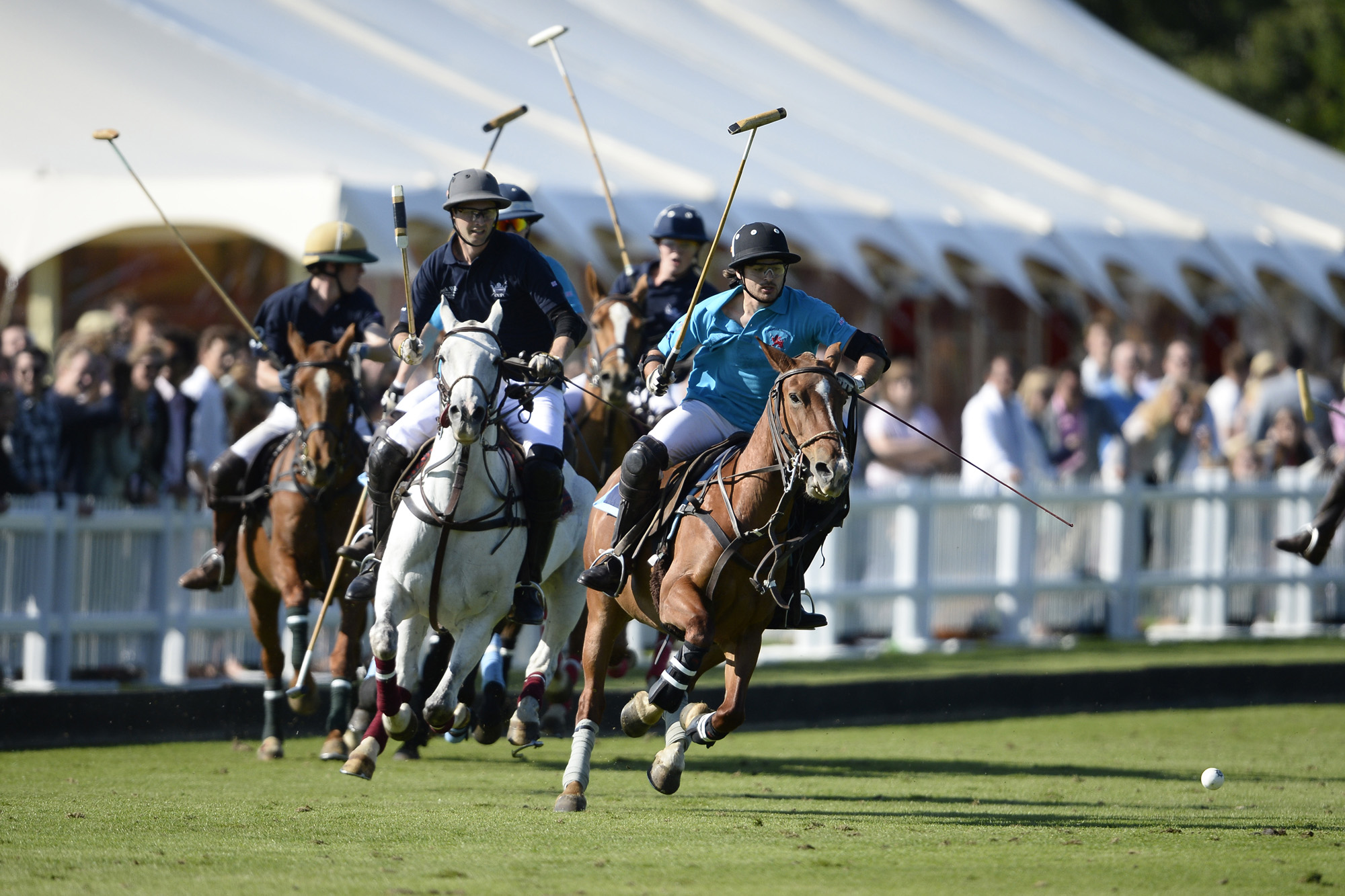
Polo speaks its own dialect — half cavalry, half sporting club. Here is the whole vocabulary, sorted by where you'll meet it.
Play & rules
How the game runs
- Chukka / chukker
- A period of play, about 7½ minutes long. A match is four to eight of them. Also used for practice ('stick & ball chukkas').
- Throw-in
- How play starts and restarts — the mounted umpire bowls the ball down the centre line between the two teams lined up shoulder to shoulder.
- Line of the ball
- The imaginary track the ball travels after it is struck. It sets the right-of-way; crossing it dangerously is the most common foul.
- Change of ends
- Teams swap directions after every goal so neither side is favoured by sun, wind or slope.
- Throw-in line / 30, 40, 60
- The distances from goal at which penalty hits are taken, depending on the severity of the foul.
- Safety / knock-in
- Restarts awarded when the defending side puts the ball over its own back line — taken from the spot or the back line.
Shots & skills
Striking the ball
- Offside / nearside
- The right / left side of the pony. Nearside shots, played across the horse's body, are the hardest in the game.
- Forehand / backhand
- A shot struck in the direction of travel / driven back the other way. The backhand is the back's main clearing shot.
- Ride-off
- Legally pushing pony shoulder against pony shoulder to move an opponent off the line of the ball.
- Hook
- Using your mallet to block an opponent's swing — permitted only below shoulder height and on the side the ball is being played.
- Neck shot / tail shot
- A ball struck under the pony's neck / behind its tail — advanced strokes that keep play alive at speed.
- Mallet / stick
- The cane-shafted bamboo-headed implement used to hit the ball; the ball is struck with the long side of the head, not the end.
- Stick & ball
- Solo practice hitting the ball — the core of a player's training, logged on Chukka as drill sessions.
People & ratings
Players & officials
- Handicap
- A player's rating of overall ability, from −2 to 10. A team's handicap is the sum of its four players'.
- Goals on handicap
- The head-start goals the lower-rated team begins with, derived from the handicap gap and match length.
- 10-goaler
- A player rated at the maximum handicap of 10 — the very best in the world. Fewer than a dozen exist at any time.
- Patron
- An amateur, usually the team's owner and financier, who plays alongside hired professionals.
- Pro / hired gun
- A professional player engaged to strengthen a patron's team for a tournament.
- Umpire / third man
- The two mounted officials who ride within the play, plus a neutral referee at the boards who settles their disagreements.
The pony
Horse & string
- Polo pony
- The horse itself — not actually a pony but a small, fast, agile thoroughbred-type, bred above all for stop, turn and temperament.
- The string
- A player's set of ponies; a high-goal player may ride six to eight different horses in a single match.
- Best Playing Pony (BPP)
- The award for the finest horse of a match or tournament — ponies are judged and honoured separately from riders.
- Tail-wrap / bandages
- The protective wrapping on a pony's tail and legs, both practical and part of the turnout.
- Groom
- The essential support behind every string — preparing, swapping and caring for the ponies through a match.
Field & furniture
The ground
- The boards
- The low side-boards running the length of a grass field that keep the ball in play; 'at the boards' means near them.
- Goal
- Two posts 8 yards apart with no crossbar — any height counts. Worth one point.
- Arena
- The walled, sand-floored enclosure used for the three-a-side indoor variant of the game.
- Penalty / spot hit
- A free hit awarded for a foul, taken from 30, 40 or 60 yards out, or as an undefended spot hit.
- Divot stomp
- The half-time tradition in which spectators walk the field to tread the kicked-up turf back into place.
That's the vocabulary — now see it in action across the registry.