History & origins
From Manipur to the world
A game older than almost any other, born on the small hardy ponies of north-east India.
Polo is the oldest team sport in the world — and to find its source you have to travel not to England or Argentina, but to a valley in north-east India.
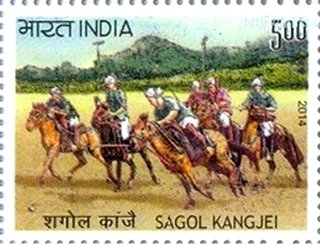
Long before it was the game of maharajas and cavalry officers, polo was Sagol Kangjei — the Meitei ball-and-stick game played on horseback across the valleys of Manipur. Sagol means pony, kangjei the stick-and-ball game; together they name what is, in all but its modern dress, the same sport played at Palermo and Cowdray Park today. Manipuri tradition reaches back well over a thousand years, and the polo ground at Imphal — the Mapal Kangjeibung — is considered the oldest living polo field on earth.
The very word travelled with the game. "Polo" descends from the Balti pulu, the willow root from which the ball was carved. When the British first wrote the name down, they were simply transcribing what they heard at the boards.

1859 – 1862
The British carry it outward
In 1859, British tea planters and army officers in Silchar, on Manipur's western frontier, watched the local game and were captivated. Two of them — Joseph Sherer, "the father of English polo", and Captain Robert Stewart — set down the first European rules. In 1862 they founded the Calcutta Polo Club, the oldest polo club in the world still in existence.
From the regimental grounds of British India the game spread with astonishing speed. Officers carried it home to England, where the first match was played at Hounslow Heath in 1869; from there it crossed to Argentina and the United States within a single generation. A game that had been almost unknown outside one Indian valley was, by 1900, played on three continents.
Polo is the only major team sport in which the athlete and the animal are judged together.
The modern era
Argentina becomes the heartland
By the early twentieth century Argentina had become the spiritual home of high-goal polo, with the deepest pool of players and the finest ponies anywhere — bred from a cross of criollo stock and English thoroughbred into the modern polo pony. The Argentine Open, first played in 1893 and contested at Palermo in Buenos Aires, remains the most prestigious tournament in the sport — the only one routinely played at the maximum 40-goal level.
Polo also had a brief Olympic life, appearing at five Games between 1900 and 1936 before being dropped. Today it is played in more than eighty countries — from the historic grounds of Jaipur and Hurlingham to the sand arenas of the United States and the snow of St. Moritz — but the line back to those Manipuri ponies has never been broken.
Next: How it's played →