How it's played
Four a side, six chukkas
The shape of a match — on the largest field in organised sport.
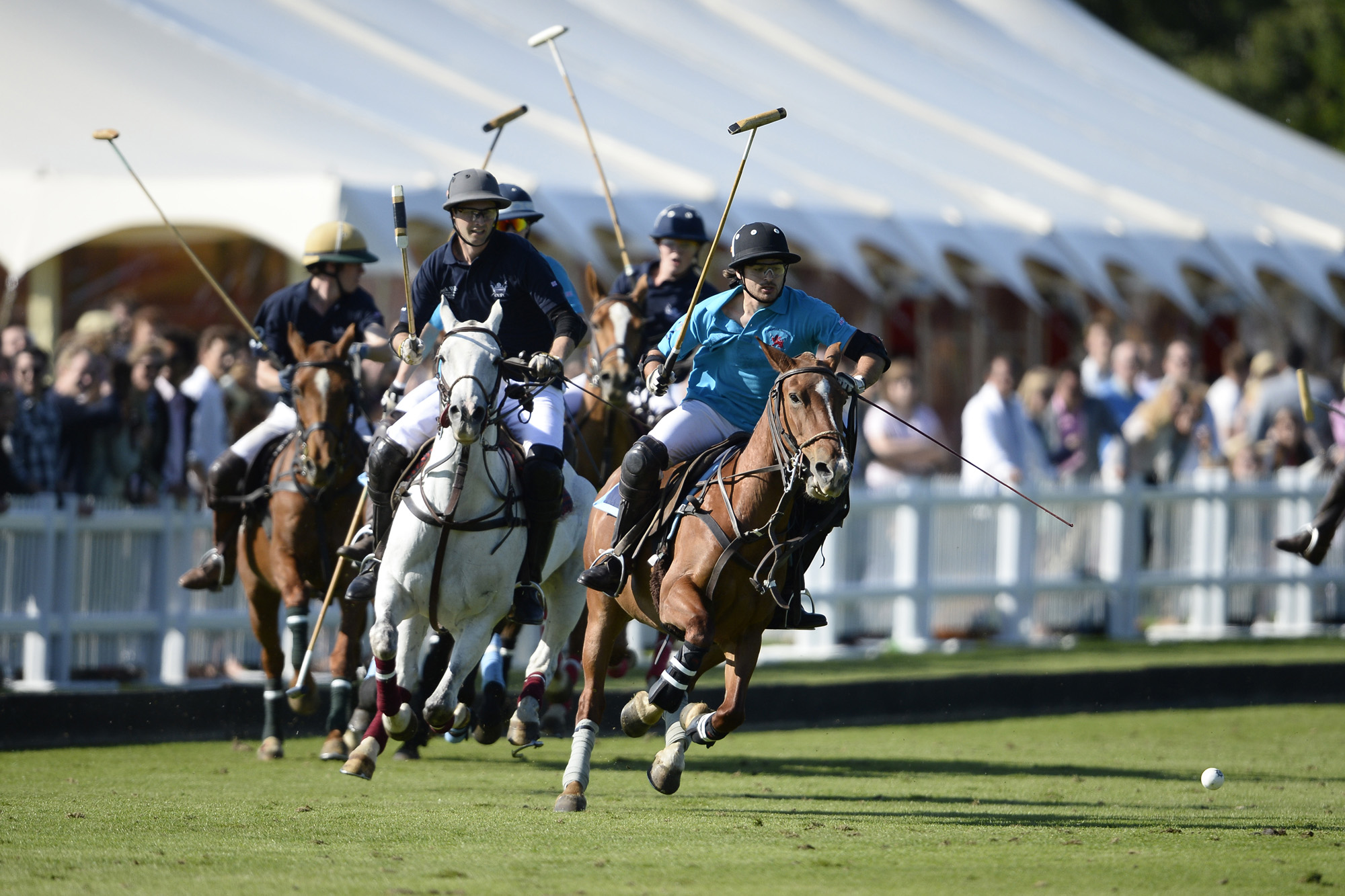
Strip polo to its essentials and it is gloriously simple: ride a horse, hit a ball with a stick, and put it through the goal more times than the other team.
The detail is where the game becomes an art — the speed of the ponies, the etiquette of the line of the ball, the geometry of four riders weaving at thirty miles an hour. Here is the whole game, built up step by step.
The game in six steps
How a match unfolds
- 1
Two teams of four take the field
Each side fields four mounted players, numbered 1 to 4 on their shirts. There are no substitutes — but every player swaps ponies through the match, because no horse plays at a flat gallop for long.
- 2
The umpire throws the ball in
Play starts with a throw-in: the mounted umpire bowls the ball down the centre line between the two teams lined up shoulder to shoulder. The same throw-in restarts play after most stoppages.
- 3
Hit the ball toward your goal
Players strike a small hard ball with a long bamboo-and-cane mallet, swung on the right side of the pony. The aim is simple — drive the ball through the opponents' goal, two posts set 8 yards apart with no crossbar and no height limit.
- 4
Respect the line of the ball
The ball's path creates an invisible right-of-way called the line of the ball. You may not cross it dangerously in front of the player who owns it — this single rule governs almost all of polo's fouls.
- 5
Change ends after every goal
Score, and the teams immediately swap directions of play. It is a courtesy built into the rules so that neither side is favoured for long by sun, wind or a sloping ground.
- 6
Play out the chukkas
The match runs in short periods called chukkas, each about 7½ minutes. Between them, players change to a fresh pony. The side with the most goals at the end — after any handicap head-start — wins.
The arena
The field & the chukka
A full grass polo field is roughly 300 by 160 yards — about nine football pitches laid together — which makes it the largest field in organised sport. The sidelines are marked by low boards that keep the ball in play and the ends by goals 8 yards wide.
A match is divided into periods called chukkas (sometimes spelled "chukkers"), each about seven and a half minutes of play. Most matches run four to six chukkas; the very biggest run eight. Because a pony is ridden flat-out, no horse plays two chukkas back-to-back — every player keeps a string of ponies and changes between, and sometimes within, periods.
The team
The four positions
Each number is a job, not just a shirt. The positions flow into one another constantly, but every player begins from a defined role:
The forward
Primarily attacking — the finisher who plays in front of goal and looks to convert.
The hustler
A hard-riding forward and midfielder; often the busiest, most physical player on the field.
The pivot
Usually the highest-rated player and the team's playmaker, linking defence to attack.
The back
The last line of defence — clears the ball with long backhands and marks the opposing No. 1.

The one rule to know
The line of the ball
The single most important rule in polo is the line of the ball — the imaginary track the ball travels after it is struck. Whoever last hit the ball, or follows it most closely on that line, has the right-of-way; an opponent may not cut dangerously across it. Crossing the line is the most common foul in the game.
Within those bounds the contest is physical. A defender may legally ride off an opponent — pushing pony shoulder against pony shoulder to nudge them off the line — or hook their mallet (below shoulder height) to spoil a shot before it is played.
Know the line of the ball and the goal-change, and you can follow any polo match in the world.
Scoring
Goals, ends & the offside swing
A goal is worth one point, and — uniquely in team sport — teams change ends after every goal, keeping wind and ground conditions even. Shots are mostly forehands and backhands struck on the offside (right) of the pony; the harder nearside(left) shots, played across the horse's body, are the mark of a skilled player and are weighted more heavily in any analysis of performance.
Next: The variants →